Featured Research
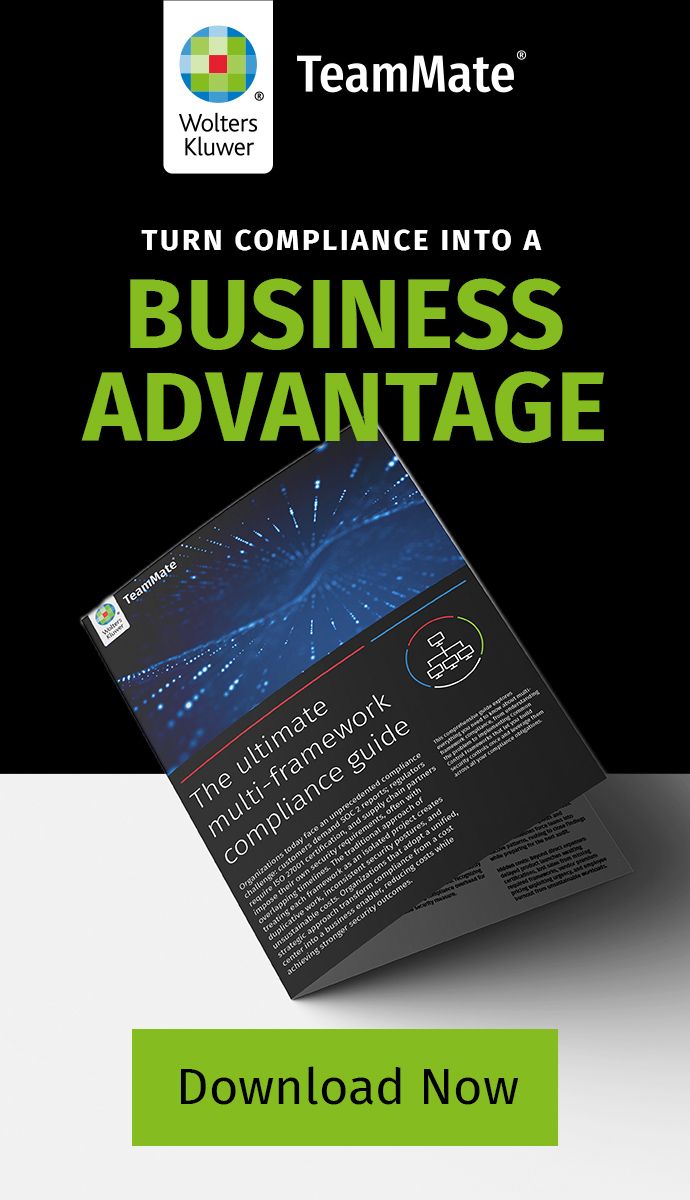
The ultimate multi-framework compliance guide
Write your awesome label here.
Request your Free Research Report:
Write your awesome label here.
Get your Free Research Report!
This guide explains why modern organizations struggle with overlapping compliance frameworks and how a unified, strategic approach can eliminate redundant work, reduce cost, and strengthen security. It opens by describing the reality facing mid‑sized and enterprise companies: customers demand SOC 2, regulators require ISO 27001, healthcare partners expect HIPAA or HITRUST, and government contracts mandate NIST CSF.
Emerging regulations like DORA and NIS 2 add further pressure. The guide notes that while each framework serves a legitimate purpose, the real problem is how organizations respond—“Most enterprises treat each framework as a separate compliance project,” resulting in duplicated controls, scattered evidence, inconsistent maturity, and perpetual audit cycles.
The document introduces multi‑framework compliance as a discipline that recognizes overlap across standards and implements shared controls once, leveraging them everywhere. The centerpiece of this approach is the Common Control Framework (CCF), a unified catalog of controls mapped to all frameworks. The guide explains how CCFs provide a single source of truth, a common language across standards, streamlined audit preparation, and scalability when new frameworks arise.
It then outlines architectural models for designing a CCF: canonical models for maximum efficiency, layered models for balancing rigor and specificity, role‑based structures aligned to organizational ownership, and compliance‑code approaches for large, complex environments. The guide details the anatomy of an effective control, emphasizing clear identifiers, descriptive titles, actionable descriptions, defined ownership, risk ratings, test procedures, and evidence requirements.
Next, it covers building a control taxonomy across domains such as IAM, asset management, cloud security, incident response, vendor risk, and more. A substantial section explains mapping methodologies—one‑to‑many, many‑to‑one, partial mappings—and stresses mapping outcomes rather than keywords. It provides a full template for mapping tables and guidance on maintaining them.
Finally, the guide presents a full implementation roadmap: discovery, design, GRC platform configuration, automation, operationalization, and audit preparation. It concludes by asserting that strategic multi‑framework compliance transforms security from fragmented chaos into a scalable, resilient, and cost‑efficient program.
Emerging regulations like DORA and NIS 2 add further pressure. The guide notes that while each framework serves a legitimate purpose, the real problem is how organizations respond—“Most enterprises treat each framework as a separate compliance project,” resulting in duplicated controls, scattered evidence, inconsistent maturity, and perpetual audit cycles.
The document introduces multi‑framework compliance as a discipline that recognizes overlap across standards and implements shared controls once, leveraging them everywhere. The centerpiece of this approach is the Common Control Framework (CCF), a unified catalog of controls mapped to all frameworks. The guide explains how CCFs provide a single source of truth, a common language across standards, streamlined audit preparation, and scalability when new frameworks arise.
It then outlines architectural models for designing a CCF: canonical models for maximum efficiency, layered models for balancing rigor and specificity, role‑based structures aligned to organizational ownership, and compliance‑code approaches for large, complex environments. The guide details the anatomy of an effective control, emphasizing clear identifiers, descriptive titles, actionable descriptions, defined ownership, risk ratings, test procedures, and evidence requirements.
Next, it covers building a control taxonomy across domains such as IAM, asset management, cloud security, incident response, vendor risk, and more. A substantial section explains mapping methodologies—one‑to‑many, many‑to‑one, partial mappings—and stresses mapping outcomes rather than keywords. It provides a full template for mapping tables and guidance on maintaining them.
Finally, the guide presents a full implementation roadmap: discovery, design, GRC platform configuration, automation, operationalization, and audit preparation. It concludes by asserting that strategic multi‑framework compliance transforms security from fragmented chaos into a scalable, resilient, and cost‑efficient program.
Executive IT Forums, Inc.
Educational Programs on Information Technology, Governance, Risk Management, & Compliance (GRC).
Our Newsletter
Get regular updates on CPE programs, news, and more.
Thank you!
Copyright © 2026 Executive IT Forums, Inc. All Rights Reserved.
Get started
Let us introduce our school
Write your awesome label here.
